Why the Fed Is Hesitant to Follow Suit in Lowering Interest Rates
Federal Reserve Chairman Jerome Powell dismissed any notions on Wednesday that the central bank was considering rate cuts to offset potential economic downturns caused by President Trump’s tariffs.
During a press briefing, he employed variations of the term "wait" twenty-two times to emphasize that the Fed is not hurried. Powell stated, "We believe the expenses associated with waiting for more developments are relatively minimal, which is why this is our course of action."
Powell’s comments, delivered after the Fed agreed to prolong its moratorium on interest rate increases , revealed how Trump’s erratic and volatile trade statements have created a rift in monetary strategy between the U.S. and similar affluent nations.
The cause of the difference is clear. Other economies have not implemented significant tax hikes on imports. Consequently, these countries are experiencing the impact of reduced demand and less robust job markets without facing price pressures that Federal Reserve officials might address later this year.
Furthermore, since the economy has recently experienced a challenging phase of elevated inflation, Federal Reserve officials believe they cannot afford to lower interest rates preemptively to encourage a deceleration in employment growth, as this could potentially exacerbate upward pressure on prices in the near term.

In contrast to 2019, when the Federal Reserve reduced interest rates three times to bolster the economy against declining confidence following President Trump’s initial trade conflict with China, "We’re not in a scenario where we can act preemptively since we genuinely won’t know the appropriate reaction to the data until we have seen more of it," Powell stated on Wednesday.
In essence, the Federal Reserve finds itself in a distinct situation compared to its counterparts in Europe, Canada, and the U.K. Powell indicated that the Fed might only reduce rates—possibly at an accelerated pace—if it observed significant signs of economic deceleration.
The Fed reduce its reference short-term interest rate By one percentage point in the latter part of 2024, as inflation decreased and the unemployment rate rose slightly. Since December, they have kept the federal funds rate constant at approximately 4.3%.
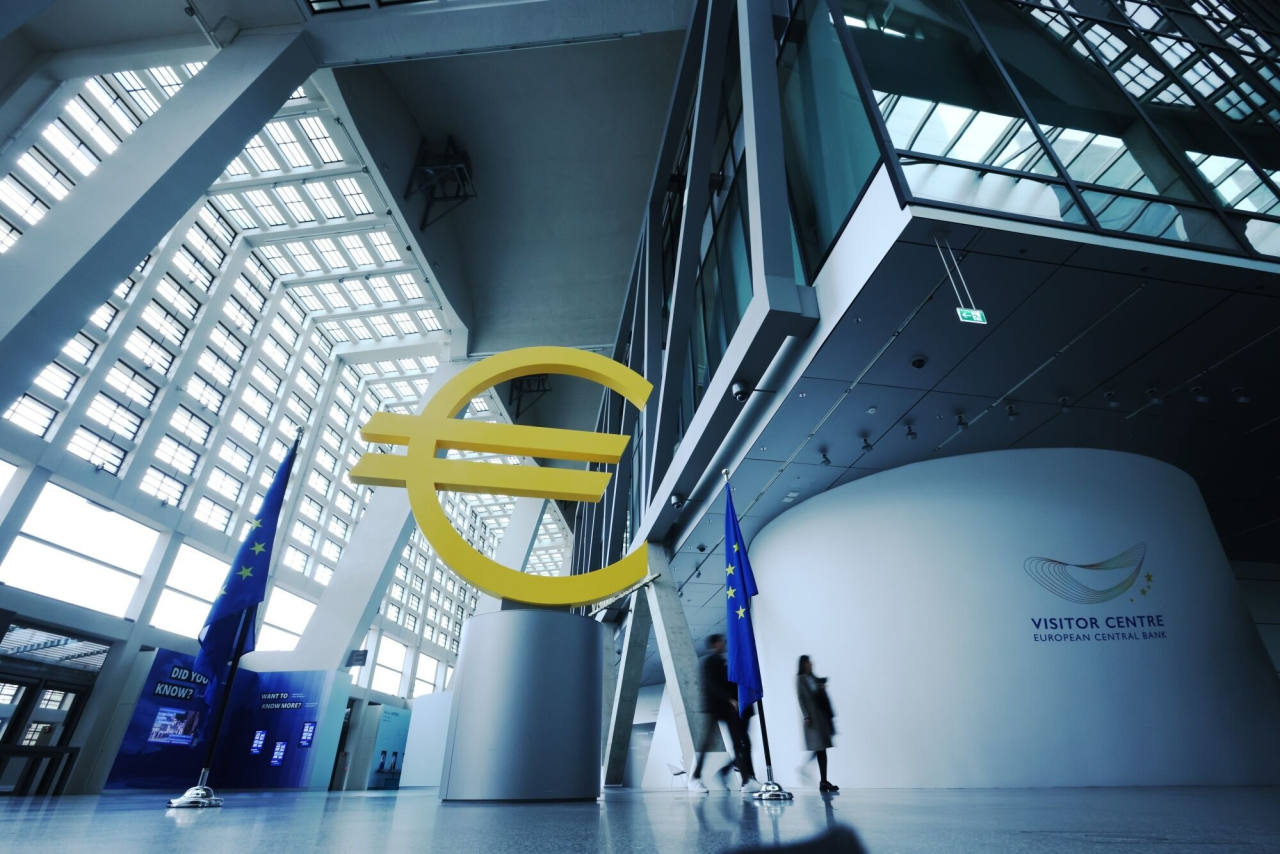
In the meantime, the European Central Bank has cut its benchmark rate seven occasions in the past year by a total of 1.75 percentage points, to 2.25% last month On Thursday, the Bank of England reduced its key interest rate to 4.25% from 4.5%. This marks the institution's fourth reduction since the previous summer.
"In Europe, their economy was not particularly robust initially, which means they have additional time to focus solely on the impact on growth," remarked Neil Dutta, who leads economic research at Renaissance Macro Research.
Shortly before the European Central Bank's interest rate reduction last month, Trump strongly criticized Powell for not cutting rates quickly enough. He stated that the Federal Reserve ought to emulate the ECB's approach.
"Everyone else is reducing their rates, except for him," Trump stated to journalists in the Oval Office on Thursday, referring to the Bank of England's interest rate reduction. Trump indicated that he had no desire to meet with Powell. "It feels like speaking to a brick wall," Trump commented.
Powell has consistently stated that the Fed bases its decisions on its evaluation of what will best achieve its dual objectives of maintaining low inflation and fostering robust labor markets.
Trump’s irritation with the divergent approaches taken by the Federal Reserve and the European Central Bank indicates that "nobody explained to him how tariffs impact others differently than they impact us, since those economies aren't as concerned about the inflationary effects of these tariffs," Dutta stated. "The Fed, however, must consider this aspect."
Several Federal Reserve officials have expressed worry that reducing interest rates before the economy shows signs of weakening might exacerbate inflationary pressures over the near term.
To reduce rates, "we're simply awaiting firms to start laying off employees," stated Dutta. He expressed concern that the Fed might be overly relaxed regarding labor market risks due to inflation fears triggered by tariffs.
The economists from JPMorgan Chase anticipate that the Federal Reserve will reduce interest rates in September. Meanwhile, analysts at Goldman Sachs predict that the Federal Reserve will decrease rates thrice throughout the year starting with cuts in July. Both groups foresee the European Central Bank persistently lowering rates by quarter points until September, resulting in an eventual target rate of 1.5%.
The inflation rate for the eurozone stood at 2.2% in April, whereas it reached 2.3% in the U.S. during March. Both the European Central Bank and the Federal Reserve aim for an inflation target of 2%.
Jan Hatzius, the chief economist at Goldman Sachs, suggested that the ECB might decrease rates further than anticipated due to potential increases in Chinese imports into Europe as a result of U.S. tariffs on China. This surge could lower European core inflation—excluding unstable food and energy costs—by up to half a percentage point.
That's quite a significant figure since it marks the distinction between slightly exceeding 2% and falling somewhat short of 2%," he stated. Should inflation in Europe end up staying under 2%, "you might be able to convince many of the committee's hawks...to implement further reductions.
Send your message to Nick Timiraos at Nick.Timiraos@wsj.com

Posting Komentar untuk "Why the Fed Is Hesitant to Follow Suit in Lowering Interest Rates"