Trump's Tariffs Could Rescue Family Farms Like Mine – If He Gets It Right | Opinion
The last time tariffs The topic of discussion from a decade back was centered around my father who was still tending his fields despite advancing age. My sister had taken up more responsibilities alongside him, contemplating strategies to sustain our farm amidst raising her expanding family. Our card game sessions with grandma remained unchanged; she persisted in not letting us win, subtly teaching us valuable life lessons through these contests. world plays for keeps.
It served as an appropriate lesson: Global trade disputes were on the verge of demonstrating that farms had never been more susceptible.
If the threat of trade disputes It feels familiar because we're experiencing it once more – but this time around, the stakes have escalated even further. As President, Donald Trump compares tariffs with numerous nations It’s now crystal clear what our next step should be: We need to negotiate a new phase of trade agreements that will prioritize American family farms once and for all.
Receive daily updates about the Packers throughout the season.
The previous instance when we encountered something similar occurred shortly after Trump emerged as the frontrunner for the Republican presidential nomination back in 2015. He promised even then, just as he does today, to put an end to countries taking advantage of the U.S.
Trump's comments about tariffs bring back memories from his first term.
Farmers were already facing difficulties. The production of beef, pork, poultry, milk, and various row crops was increasing; however, by 2018, demand had stagnated for numerous items. Volatile market conditions once more led to reduced prices and challenging circumstances for agriculturalists.
That spring, Trump imposed global tariffs on China. And from other nations, stating he'd bring our biggest trade ally to its knees.
Economists have long recognized that China has been manipulating farmers by purchasing their products to create dependency and subsequently reducing sales to drive down prices, along with various forms of deception. However, how to address this issue remains a topic of discussion.
Surveys conducted at the time indicated that farmers were eager to endure the brief hardship from international backlash for the sake of securing improved trade agreements in the future. However, they encountered repercussions as well; eventually, the administration had to concede. $28 billion in assistance for farmers affected by falling sales.
Ultimately, trade during the presidencies of Donald Trump and Joe Biden Returned to normal except for issues with China. Rising prices as we moved toward 2020 provided farmers with some relief, and Americans soon put aside what had occurred on their farms.
In rural areas, though, we didn’t lose track of it.
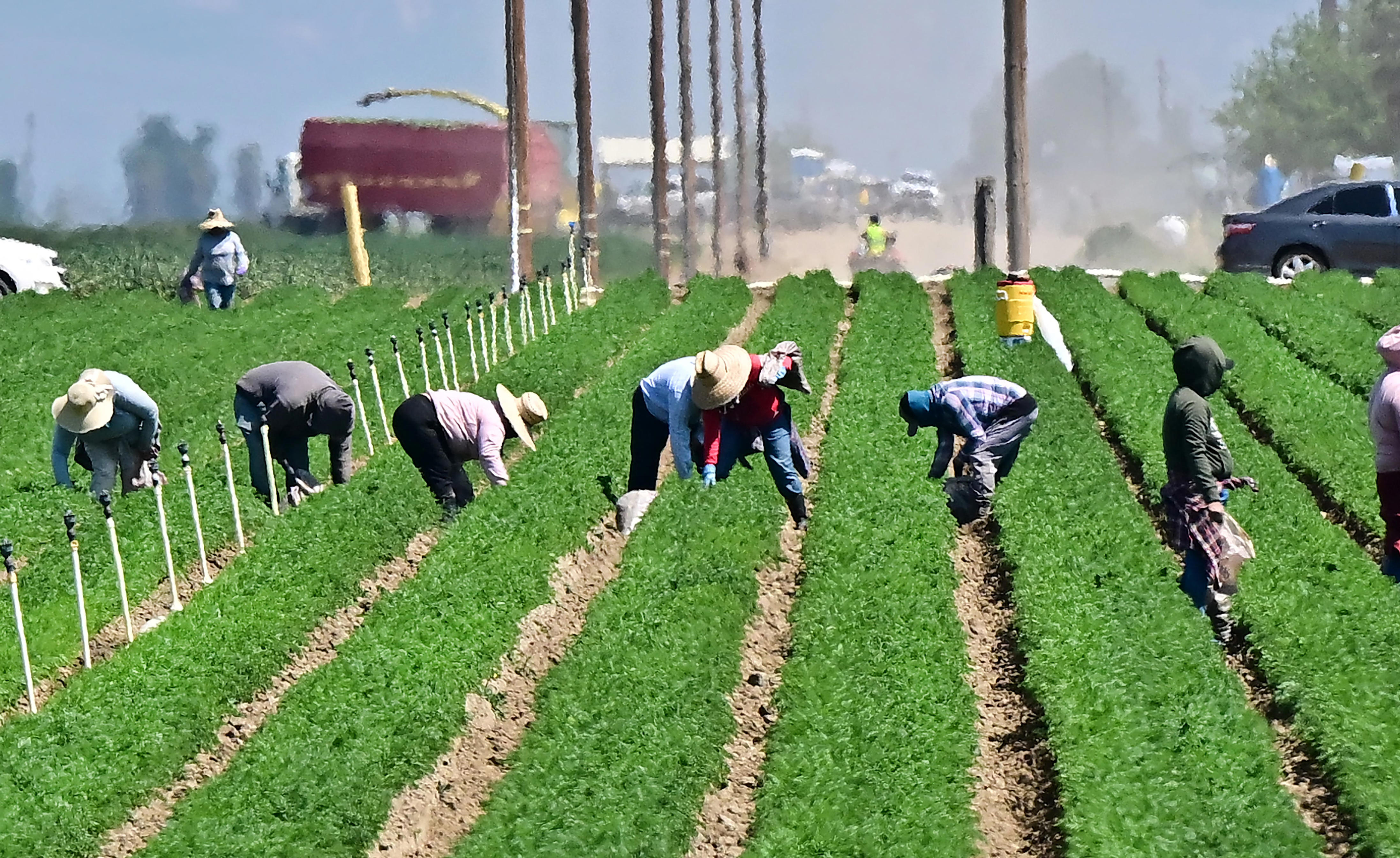
My father and I strolled around a nearby farm since the family managing it was about to sell off their entire holdings. I conversed with farming families whose children attended my school, as they struggled desperately not to lose everything they owned. As we cruised through the countryside, the land bore signs of distress. One farm vanishes after another. .
What strategies do farmers employ? They seize the opportunity.
Today’s circumstances are complex, brimming with both challenges and opportunities for farmers, and you will encounter various perspectives on how to proceed.
Following an increase in tariffs globally, The Trump administration has temporarily halted them to provide countries "an opportunity to negotiate" and states An agreement with China is nearly reached. .
The discussion about finalizing trade agreements arises as the stock market has been experiencing fluctuating ups and downs. farmer support for tariffs has begun to slip.
I contacted my sister, who represents the fourth generation in an extensive lineage. self-reliant women paving the way ahead for our farm , to hear her thoughts. She couldn’t have illustrated the point more effectively.
Malia was constructing a chicken tractor – a movable coop designed to let us offer eggs from free-range chickens to nearby buyers – as she prepared to sow row crops that frequently get traded globally.
She believes that addressing unfair trade requires establishing strict boundaries, and feels it’s advantageous to achieve self-reliance through domestic agriculture. However, she acknowledges that not all products can be locally produced and supports exporting surplus American goods. According to her, an ideal trade agreement should clearly advantage American farmers.
This implies that there is essentially just one course of action: Capitalize on the opportunity to create more favorable agreements.
There are methods for achieving this. By negotiating with each nation individually and focusing on a single product at a time, as the The Farm Journal Foundation economist, Stephanie Mercier, As has been proposed, this approach could enable the U.S. to bypass the compromises inherent in extensive agreements (opening up new markets in certain areas versus an influx of undesired imports from different regions). Targeted trade This also boosts America’s influence over each nation. Additionally, we should broaden our trade partnerships to ensure no single country can dominate us.
The options are unjust trade practices or no trade at all, and neither choice works for the typical American farmer.
If Grandma were around, I believe she'd suggest it's about time we reshuffled the deck.
Brian Reisinger, a writer hailing from a family farm in Sauk County, Wisconsin, provides contributions such as columns and videos to the Ideas Lab at the Journal Sentinel. where this column initially appeared He is the author of " Wealthy Land, Penniless Wallet: My Family’s Dreams and the Hidden Story Behind the Vanishing American Farmer Reisinger operates in public affairs consulting at Platform Communications, which has its roots in Wisconsin. His schedule alternates between Sacramento, California — known as America’s “farm-to-fork hub” close to where his spouse’s relatives reside — and their family farm located in Wisconsin. You can find him on X: @BrianJReisinger
The article initially appeared in the Milwaukee Journal Sentinel. Trump's tariffs could rescue American family farms such as mine – provided he gets it right | Opinion

Posting Komentar untuk "Trump's Tariffs Could Rescue Family Farms Like Mine – If He Gets It Right | Opinion"