Trump Says Prices Are Down. The Data Tells a Different Story.
President Donald Trump maintains that prices are decreasing, despite ongoing consumer worries about economic conditions. He has frequently criticized Federal Reserve Chairman Jerome H. Powell for failing to reduce interest rates to counterbalance the impacts of his trade policies. Concurrently, he has brushed aside inflation fears, asserting that "prices have dropped" and stating that there is essentially "NO INFLATION."
The situation is complex. Although consumer prices had been decreasing prior to the implementation of Trump’s tariffs last month, official economic statistics gathered by the government haven’t reflected the impact of these tariffs yet and probably won’t until later this summer. Moreover, even though prices for certain items like oil and gas have dropped—something President Trump frequently highlights—economists argue that these figures fail to account for more comprehensive patterns.
Here’s what you should understand regarding inflation and the pricing of everyday items.
According to Trump, what is occurring?
Trump has highlighted falling prices of a handful of goods to argue that inflation is essentially over, particularly for oil and gas.
"Gas prices have dropped, energy costs are lower, grocery expenses are reduced, and even egg prices are down," Trump informed journalists on Thursday at the Oval Office.
“He mentioned that everything has fallen.”
Are prices really falling?
Economists acknowledge that Trump may be correct since certain specific goods have indeed experienced a drop in their price tags.
After reaching $80 per barrel on January 15, West Texas Intermediate crude oil dropped by almost 30%, falling to $56.69 per barrel earlier this week, as noted by Joseph Brusuelas, the chief economist at RSM.
According to the most recent consumer price index report, airfare decreased by 5 percent from February to March, following a decline in February too. Additionally, the costs of certain food products such as baked goods and cereals dropped somewhat in March.
The pricing of eggs remains less straightforward. According to the Agricultural Department’s statistics, wholesale egg prices have dropped considerably this year. However, these reductions haven't been reflected in retail prices monitored by the Bureau of Labor Statistics, which indicated rising costs during the initial three months of the year. Experts suggest that we might see a decline in retail prices soon due to the fall in wholesale expenses.
Does this indicate that inflation has ended?
That's not quite right. Trump is primarily talking about decreases in prices for specific items.
That isn’t equivalent to inflation, which represents a broad rise in prices throughout the economy. According to most indicators, inflation remains a worry, albeit not as significant as it was a few years back.
The Federal Reserve’s favored measure of basic inflation, known as core personal consumption expenditures — which omits fluctuating food and energy costs — climbed at an annual rate of 3.5% during the initial quarter of this year. This indicates that the cost of most products and services has gone up beyond the Fed’s set objective of 2%. On a positive note, the speed of inflation has slowed compared to what was observed in the corresponding timeframe of the previous year.
In what way can tariffs contribute to inflation?
Trump has imposed tariffs of 10 percent on goods exported by most countries around the world, and a tariff of 145 percent on most Chinese goods. Those import taxes are expected to raise consumer prices in the U.S., as manufacturers and retailers face higher price tags for the products and parts they import.
Tariffs have the potential to disrupt the economy by complicating the production of goods and services, which may result in shortages driving up costs. Additionally, the haphazard implementation of increased import duties under Trump creates challenges for businesses trying to strategize, causing many to delay significant investments pending greater clarity.
Several merchants have already increased their prices Prices have been reported or are expected to rise as a result of tariffs. Economists anticipate that these increased costs will start appearing in national statistics over the coming summer months.
Occasionally, decreasing prices might indicate an alarming trend.
Although tariffs generally cause inflation to rise by boosting the price of imported items, they occasionally produce the reverse outcome. By decelerating economic activity and diminishing international demand, these measures can contribute to lowering prices.
This has been occurring with oil recently. The demand is decreasing due to economic concerns sparked by Trump’s trade conflict. Rising costs for steel and drilling components are dampening investments. Additionally, an increase in production by OPEC+ countries— which experts suggest is largely driven by Trump’s request for reduced gasoline prices—is leading to oversupply in the market.
"Part of what Trump considers positive developments, such as declining oil prices, can be attributed to negative factors, including the anticipation of a potential worldwide recession," stated Jason Furman, who previously served as an economic advisor to President Barack Obama and currently works at Harvard.
What about gas prices?
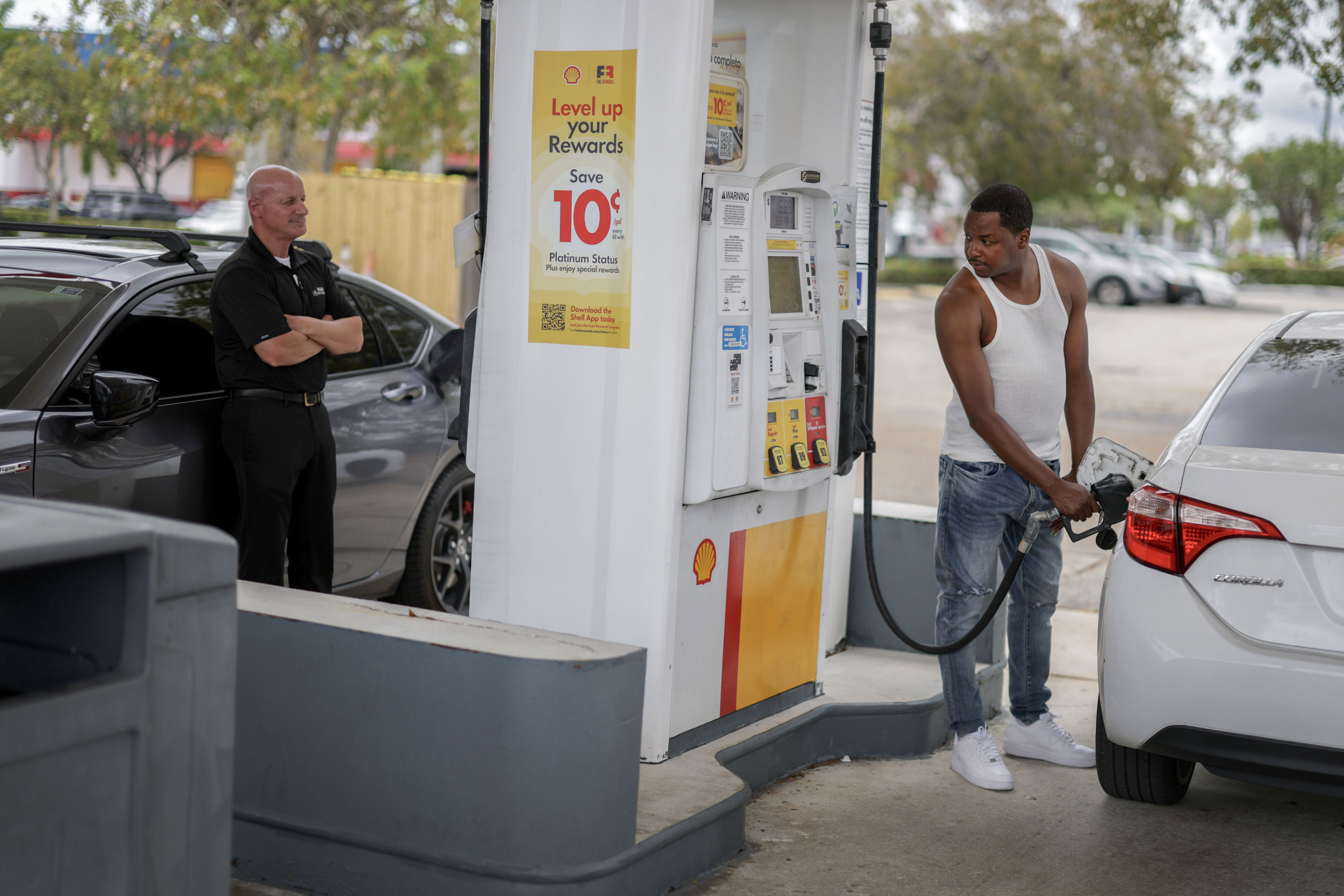
As oil prices drop, gas prices generally follow suit. According to AAA, the nationwide average cost for a gallon of gasoline stood at $3.152 on Thursday. This represents a decrease from last week’s figure of $3.186 per gallon and is also lower than $3.640 recorded this time last year.
These numbers are significantly greater compared to some of the costs Trump has promoted. During his graduation speech at the University of Alabama on May 1, President Trump claimed that gas cost $1.88 in three states. This statement was incorrect. The smallest statewide average price for gas on that date did not drop below approximately $ In Mississippi, as reported by CNN, the price is $2.66 per gallon.
What about auto prices?
Expected car prices are set to increase by thousands of dollars Due to tariffs impacting the sector's supply chain, American car manufacturers Ford and General Motors stated this week that these duties will negatively impact their profit margins.
Jessica Caldwell, who leads insights at Edmunds, stated that she hasn't observed significant price fluctuations across much of the market so far, as car manufacturers grapple with uncertainty.
“We are in a wait-and-see pattern,” she said. “We’re not seeing massive price movements as automakers are still trying to figure things out.”
Indications show that pre-owned cars are becoming much more favored as individuals seek to evade taxes imposed on new models.
At Liberty Subaru in Emerson, New Jersey, demand for pre-owned vehicles has increased over the last month, according to owner Rick DeSilvo Jr., because buyers are avoiding new cars which come with additional duties. Currently, his inventory includes just above 30 used cars, significantly less than the typical count of around 60.
"As soon as individuals find themselves unable to afford new vehicles, or even expect that they might not be able to, they begin exploring used options, which then pushes up the prices," DeSilva explained.
What does the Federal Reserve indicate?
Unlike what was seen during Trump’s first term, Inflation is already a significant worry for the Federal Reserve. because prices surged during the pandemic a few years ago and inflation continues to run above the Fed’s target. New price spikes caused by tariffs could lead consumers and businesses to expect higher inflation in the future. That shift in expectations could make inflation harder to bring down. Powell said This week, he anticipates at least a short-term rise in inflation.
Steven Kamin, a senior fellow at the American Enterprise Institute, noted that even with long-term inflation expectations staying steady and not impacting wages or other production expenses, there might still be a single uptick in prices causing the yearly inflation rate to rise to around 3 or 4 percent annually.
Abha Bhattarai and Evan Halper contributed to this report.

Posting Komentar untuk "Trump Says Prices Are Down. The Data Tells a Different Story."