Property Owners Gain Protection From CO2 Sequestration Pipelines
BATON ROUGE, La. ( Louisiana Illuminator ) - A proposal aimed at preventing the seizure of private land for carbon capture and storage pipelines in Louisiana was brought back to life on Wednesday following a tied vote in committee earlier in the week. This means the legislation will now have an opportunity to be discussed in the state’s House of Representatives.
Originally sidelined after a tie 8-8 vote last week, House Bill 601 by Rep. Brett Geymann, R-Lake Charles, was brought back before the House Committee on Natural Resources and Environment eight days later and was approved with a 11-4 vote.
“I am extremely thankful for getting this done today,” Geymann stated during an interview. He pointed out that his bill mirrors legislation passed in states like South Dakota, where comparable laws have also been approved recently.
It still has a lengthy journey ahead, but escaping from the committee is a significant milestone," he said. "I believe this is something that will gain widespread support.
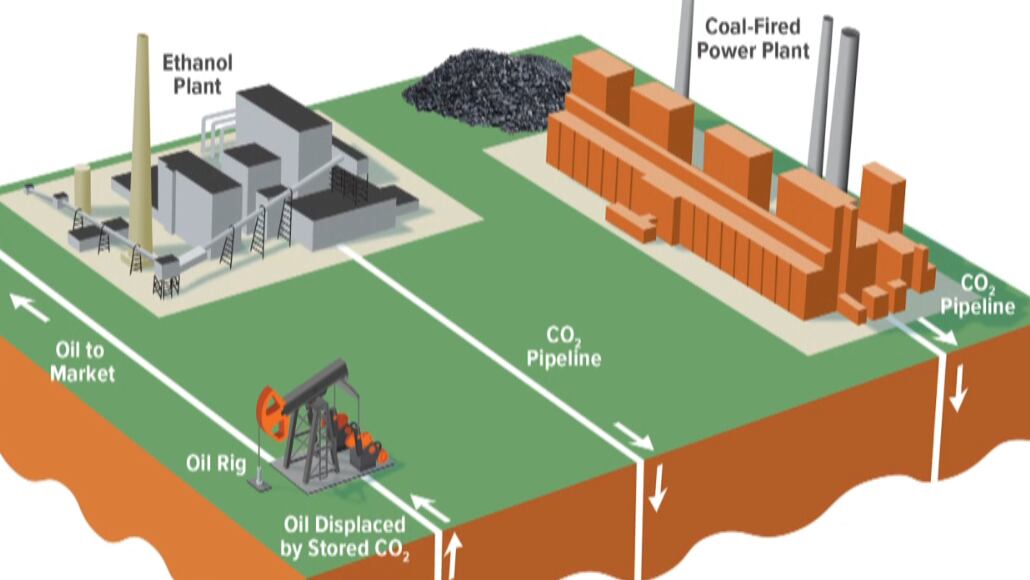
This legislation aims to stop businesses constructing CO2 pipelines from using eminent domain to expedite their projects. Eminent domain permits development on privately owned lands when such initiatives are considered beneficial enough for the general public to override the owner’s right of refusal based on property ownership.
One of the few carbon capture regulation bills to have advanced from committee this legislative session ending on June 14 is Geymann’s proposal. In contrast, other bills mandating local consent for drilling wells intended to store CO2 underground have not progressed significantly, even with substantial backing.
Geymann credits part of the success to the legislation's broader resonance with individual liberties.
It’s all about private property rights," he stated. "Several of these bills aim to eliminate carbon capture efforts. However, this particular bill does not.
Additionally, a key point in his argument for passing the bill is the notion that CCS does not have an immediate positive impact on the public welfare.
We utilize eminent domain for pipelines serving public needs like water, oil, and gas," he stated. "However, with regard to CO2—where we're dealing with a substance being permanently stored beneath the earth—I believe this does not qualify as public use. Therefore, I feel one should not be allowed to seize private property without the owner's permission.
Industry and oil representatives continued to strongly oppose Geymann’s bill.
We are working towards establishing the greatest possible chances for carbon capture initiatives to progress in Louisiana," stated Tommy Faucheux, president of the Louisiana Mid-Continent Oil and Gas Association, at the committee meeting. "This legislation significantly hampers those efforts and, in certain instances, could make them nearly unachievable.
Allan Parish Police Jury Chairman Roland Hollins expressed the opposing view during a committee meeting as he advocated for the bill’s approval. Several carbon capture initiatives have been suggested within and around Allen Parish, where Hollins heads the Louisiana CO2 Alliance—a group comprising regional officials seeking increased oversight and greater local influence over carbon storage facilities.
This legislation doesn’t close down carbon dioxide pipelines. It also doesn’t halt Carbon Capture Storage," he stated. "Instead, it provides the landowners of this magnificent state with the opportunity to make a crucially important and equitable choice regarding their property.
Eminent domain limitations in Geymann’s legislation would solely pertain to transportation pipelines used for CO2 sequestration. Operators of carbon capture and storage facilities could continue exercising eminent domain rights when constructing these facilities or building necessary power lines, provided they receive endorsement from the state conservation commissioner.
Louisiana Illuminator Is part of States Newsroom, a non-profit news organization funded by grants and contributions from a group of supporters as a 501(c)(3) public charity. Louisiana Illuminator upholds editorial autonomy. For inquiries, reach out to Editor Greg LaRose. info@lailluminator.com . Stay connected with Louisiana Illuminator on Facebook and X .

Posting Komentar untuk "Property Owners Gain Protection From CO2 Sequestration Pipelines"