China's Exports to U.S. Drop But Still Outperform Forecasts Despite Tariffs
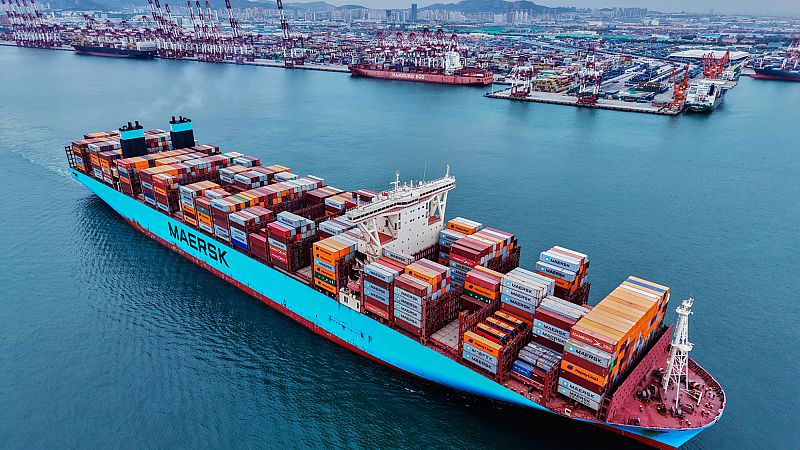
In April, China's exports to the U.S. dropped sharply as its trade with other countries saw significant growth, indicating that President Donald Trump's tariff actions are accelerating changes in international supply chains.
China’s total exports climbed 8.1% last month compared to the previous year, significantly surpassing the anticipated growth rate of 2%, which analysts had predicted. Nonetheless, this growth was considerably more modest when contrasted with the robust yearly rise of 12.4% seen in March. On an annual basis, imports declined slightly by 0.2% in April.
Deliveries to the US dropped by 21% in monetary value once President Trump raised his tariffs on the majority of Chinese exports up to an extreme level of 145%. Meanwhile, China imposed retaliatory duties of up to 125% on American products. This escalation has significantly increased unpredictability for commerce between these two leading economic powers.
In April, China's imports from the U.S. fell over 13% compared to the previous year, and its contentious trade surplus with the United States stood at roughly $20.5 billion (€18.2bn), which is lower than the approximately $27.2 billion (€24.2bn) recorded in April of the prior year.
During the initial quarter of the year, Chinese exports to the U.S. dropped by 2.5% compared to the previous year, whereas imports from the U.S. decreased by 4.7%.
Tariff breakthroughs
A potential break in the tariffs stalemate could come as soon as this weekend. Treasury Secretary Scott Bessent and other senior trade officials are due to meet with Chinese officials in Geneva on Saturday. But Beijing and Washington are at odds over a raft of issues, including colliding strategic interests that will may impede progress in the talks.
Zichun Huang from Capital Economics stated in a report that some of the punitive tariffs, such as China’s counter-tariffs of 125% on U.S. goods, might be reduced. However, he believes complete elimination is improbable.
"This indicates that China's shipments to the U.S. are likely to decrease even more in the upcoming months, and these reductions won't entirely be balanced out by higher trading volumes with other nations. We anticipate that export growth may shift into negative territory before the end of this year," Huang stated.
Regardless of the outcomes from these talks, the swift rise in China’s exports to various nations demonstrates an economic shift that started many years back but has accelerated as President Trump has imposed higher obstacles for goods exported to the U.S.
A change in the trading hierarchy
International companies have been seeking alternatives to their heavy dependence on producing goods in China following the supply chain interruptions caused by the COVID-19 pandemic, which underscored the importance of having multiple production locations.
As President Donald Trump increased tariffs on Chinese imports during his tenure, the importance of adaptable supply chains became increasingly evident. Many of these tariff measures were retained throughout former President Joe Biden's administration.
In April, shipments to the United States made up roughly one-tenth of China's overall exports, with the U.S. remaining as China's biggest individual export destination. However, both the European Union and Southeast Asia represent bigger collective export regions for China.
Trading within a larger group like the 15-member Regional Comprehensive Economic Partnership (RCEP), which excludes the U.S., remains more substantial. Additionally, shipments to nations involved in China’s "Belt and Road Initiative," an extensive series of infrastructure ventures backed by Beijing, are even greater.
Boosting a staggering economy
During the initial quarter of the year, shipments to the ten-country Association of Southeast Asian Nations increased by 11.5% compared to the previous year, and exports to Latin America likewise grew by 11.5%. The value of goods sent to India escalated almost 16%, whereas exports to Africa experienced an upsurge of 15%.
Much of the rapid expansion occurred in Asia, indicating shifts by Chinese and other producers to expand their supply networks beyond mainland China. The most striking increases were seen in exports to Vietnam, surging 18% compared to the previous year. Shipments to Thailand also saw an uptick, rising 20%.
In China, initial data has indicated a significant decrease in shipping and overall trading activities. This week, Beijing unveiled multiple strategies aimed at mitigating the effects of the trade conflict on its economy, which had been facing challenges regaining strength following both the pandemic-induced slowdown and an extended slump in its real estate market.

Posting Komentar untuk "China's Exports to U.S. Drop But Still Outperform Forecasts Despite Tariffs"